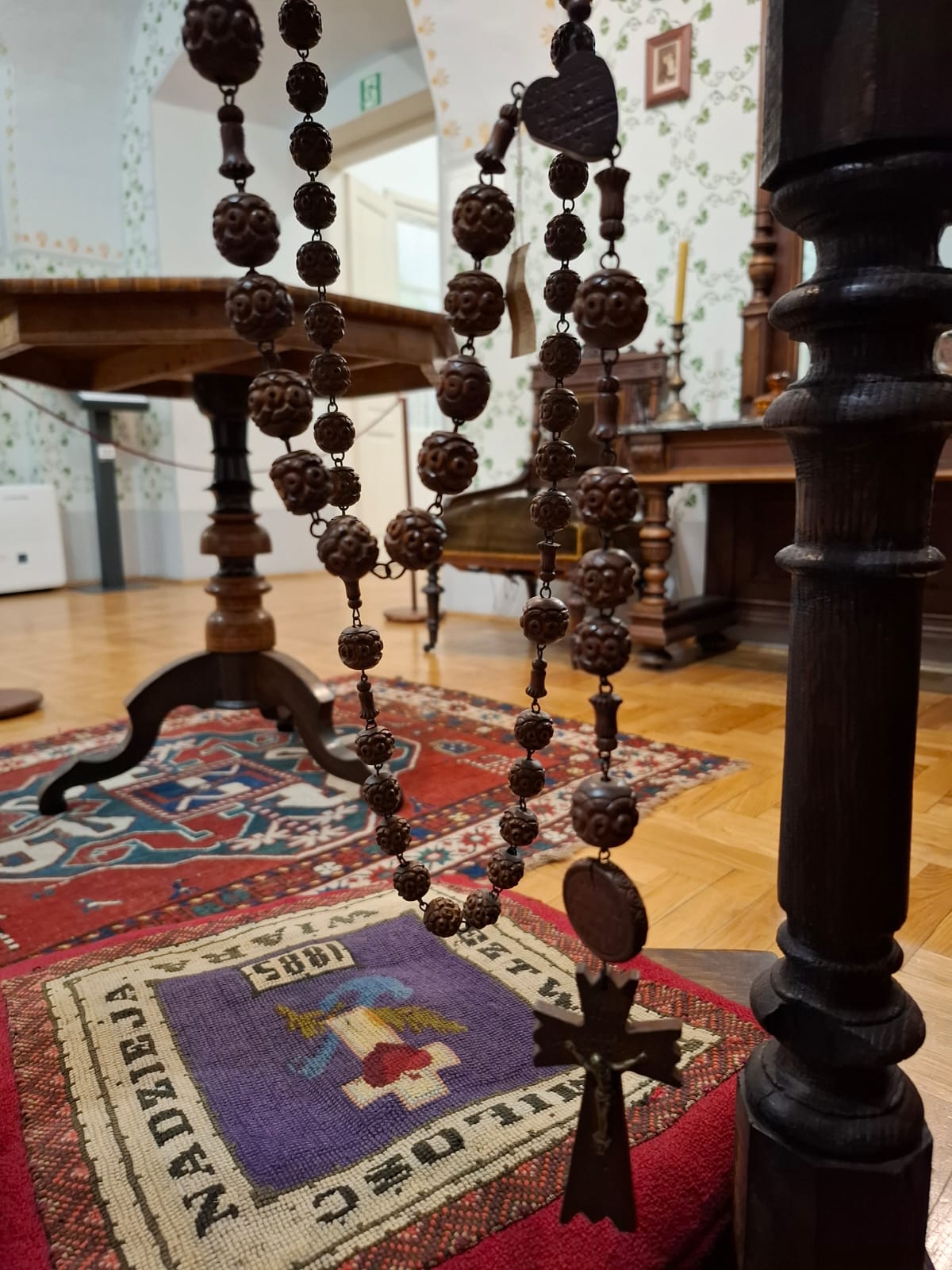
The rosary – a string of beads facilitating prayer – is known from medieval iconography. The prayer itself, consisting of repetitions of the Ave Maria, combined with meditation on the mysteries of the lives of the Virgin Mary and Jesus, has been known in various forms at least since the Middle Ages. It was established in its current form in the 16th century, approved by Pope Pius V in 1568. Its origins, in the form of repeatedly repeated prayer phrases, initially not Marian, supposedly date back to early Christianity. It was also around this time that the method of counting prayers using pebbles and then knots in the strings was said to have emerged. The strings were available in open versions, loosely hanging, or closed versions, with the ends tied together. The latter quickly gained popularity as a more practical option. Prayer beads appeared in Poland at a similar time to Western Europe. The rosary, in its developed form, like rosary confraternities, began to function at the turn of the 15th and 16th centuries, reaching its greatest popularity in the 17th century. Beads were made from a variety of materials: bone, wood, ceramics, glass, precious and ornamental stones. It’s unclear when, but production centers developed at least from the 18th century, characterized by the use of specific materials and decorations, which identified the rosary’s place of origin. They quickly became souvenirs from places of Marian devotion, as exemplified by the rosary presented here, made of sandalwood beads, a souvenir from the sanctuary in Lourdes, France.
Rosary