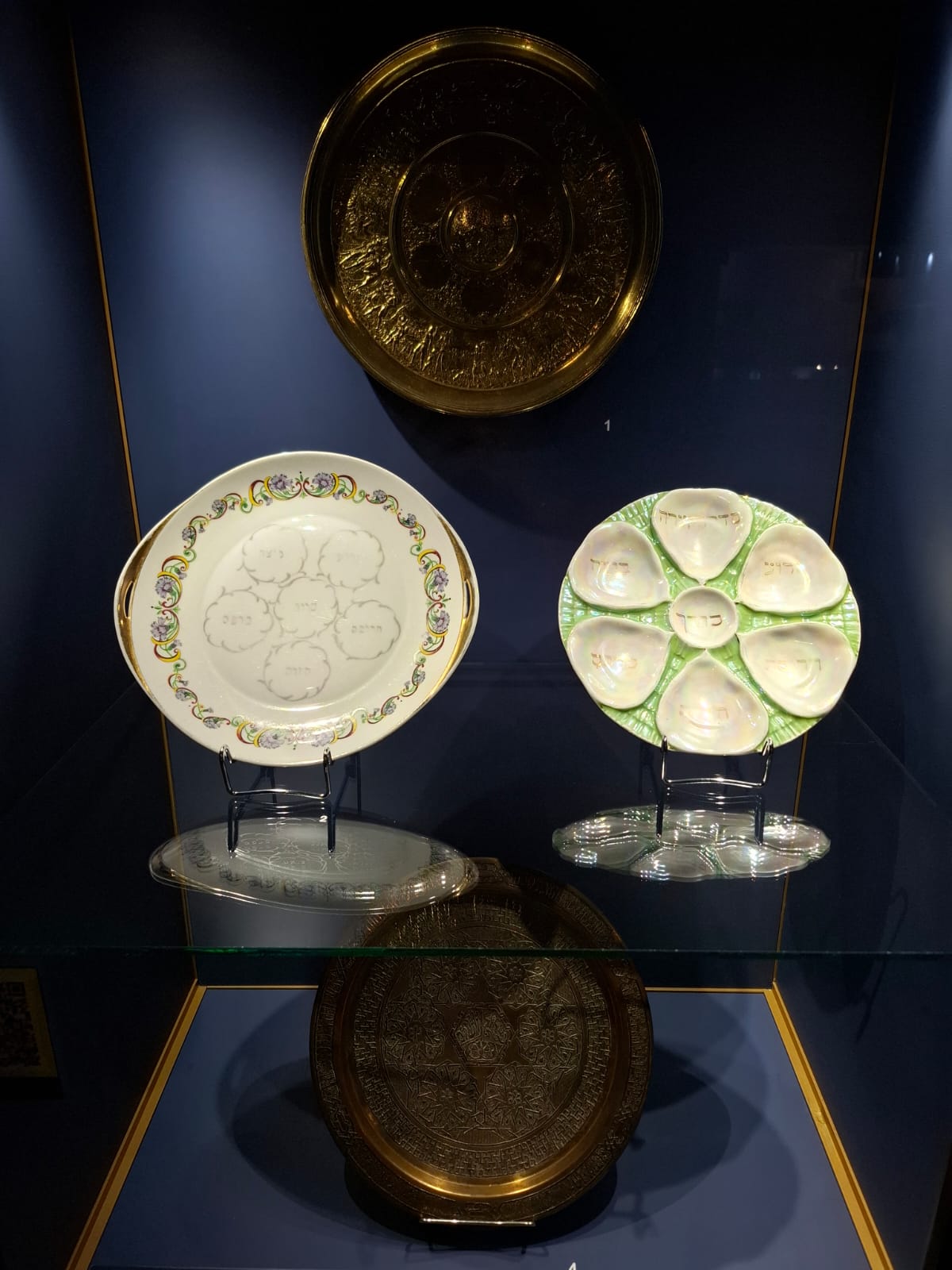
An important element of Passover is the Seder meal, which begins the holiday. Seder in Hebrew means “order.” The ceremony follows a set order, enriched by tradition and a multitude of symbols. This also applies to the tableware and the dishes served. In the display case, we present several Seder plates, made of various materials and techniques. Symbolic foods were arranged on this plate, in designated and appropriately labeled spaces. Bitter herbs—horseradish and parsley were used in Poland—symbolized the bitter and difficult life of the Israelites in Egypt. A salad of apples, nuts, almonds, cinnamon, and wine—its color recalled the bricks made during Egyptian slavery. Hard-boiled eggs—a symbol of survival and rebirth. A lamb bone—a symbol of the Passover sacrifice offered in the Temple in Jerusalem. Also included are salted waters—symbolizing shed tears. There had to be three matzos on the table – symbolizing the three social classes of the Israeli nation.
Seder Plate