

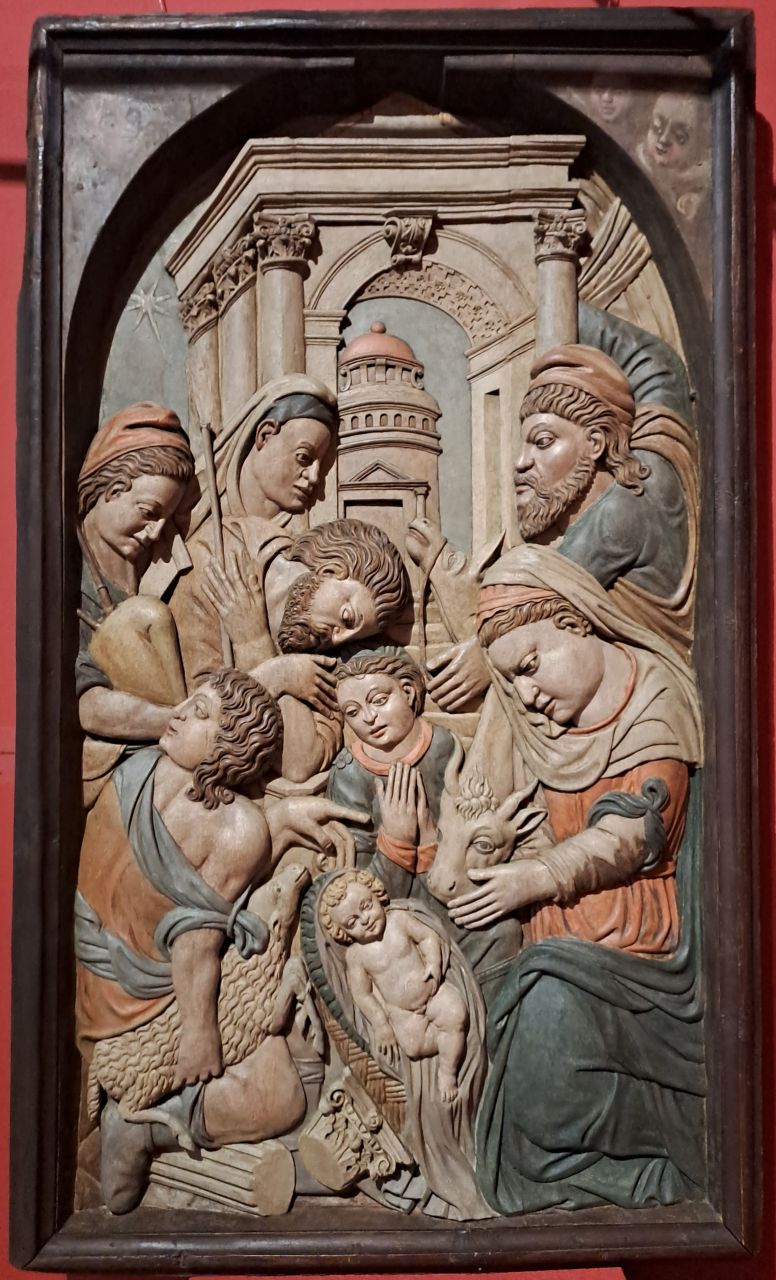
Bas-relief “Adoration of the Shepherds” [MPH-2100, Credo exhibition]
The bas-relief “Adoration of the Shepherds” is one of the most interesting artifacts in the museum’s collection. Created in the first decade of the 17th century, it represents sacred art of the Latin Rite. According to the inventory, the bas-relief entered the collection in 1920, having been brought from Przedzielnica near Dobromil. However, it has not been possible to determine which church it came from. The artist’s name is unknown, but an earlier work has been discovered that may have inspired the sculptor. This is a metal plaque of the same title from 1561, created by Gian Federico Bonzagni of Parma. The Italian artist’s composition gained some popularity, as evidenced by its reproductions in other materials. The scene on display, “Adoration of the Shepherds,” is a typical depiction of the birth of Jesus. It contains a language of symbols, recognizable to the viewer: a star is visible in the sky, symbolizing the right path to truth. A shepherd in the left corner holds a lamb, a foreshadowing of Christ’s future sacrifice. A broken column lies beneath his knee, symbolizing the fall of the Old Law and the consequences of Jesus’ teachings. The Classicist architecture depicted in the background alludes to the permanence and power of the new law described in the Gospels. The bas-relief has undergone conservation, during which the secondary repainting underlying the original polychrome was removed.