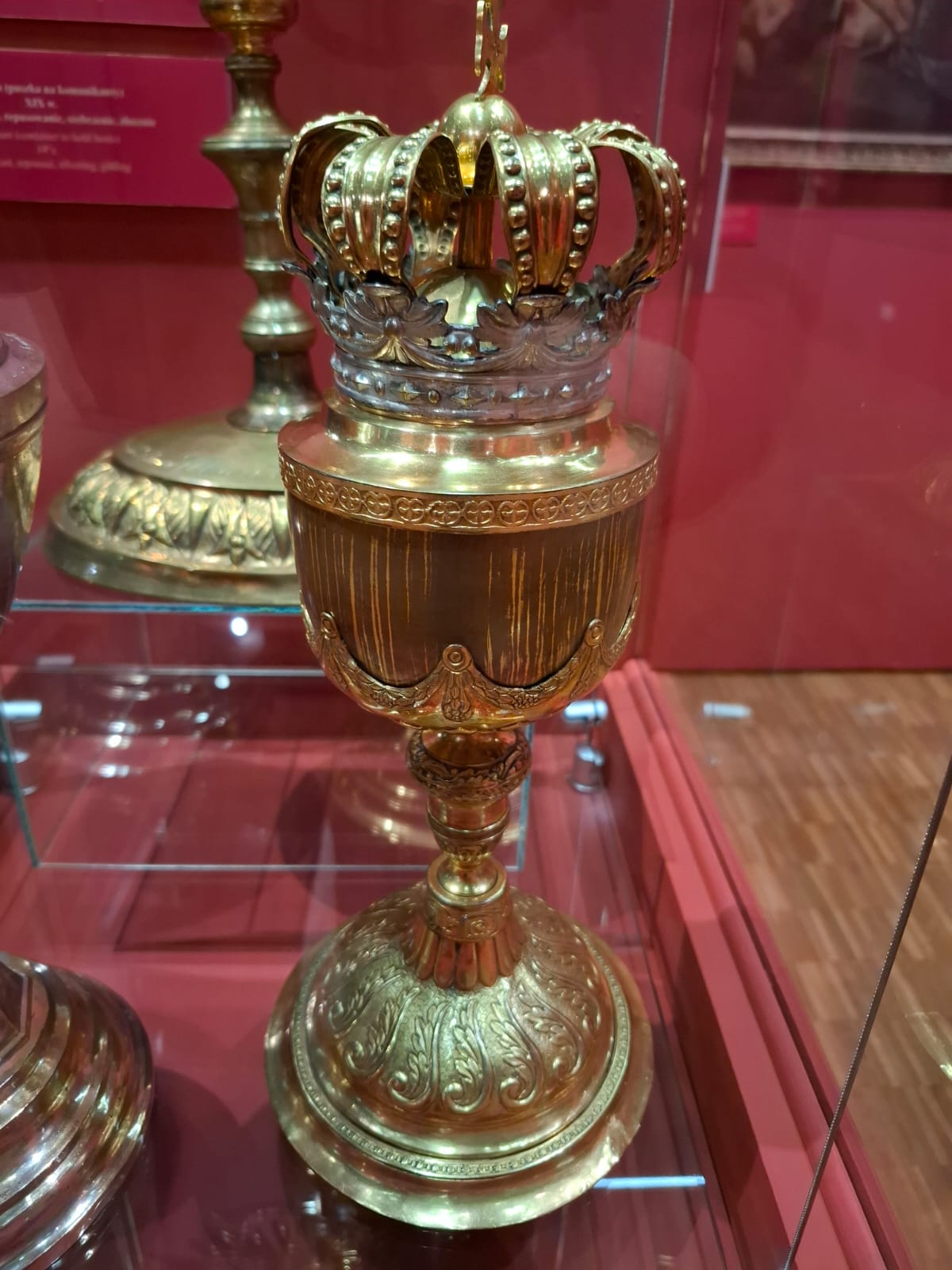
A ciborium is a container for holding the Blessed Sacrament, specifically consecrated hosts. It measures 33 cm in height, with a base diameter of 14.2 cm. The ciborium, also known as a goblet, has a lid diameter of 14.3 cm. It has taken various forms throughout history, but at least since the Baroque period, it has been in the form of a large chalice with a lid. Communion ciboriums, like other liturgical vessels, reflected the styles prevailing in goldsmithing at the time in their form and decoration. Due to their contact with the Blessed Sacrament, ciboria had to be made of durable and noble materials. These were most often precious metals, primarily silver, but always gilded, at least internally. This ciborium, founded by Stanisław Ossoliński for the parish in Kożuchów, is distinguished by its classic form, modest decoration, and well-proportioned design, constituting an interesting example of early 19th-century goldsmithing. It was probably made using the plated technique, i.e. from copper sheet with a pressed-in layer of silver, later processed like silver products.
Pyx