

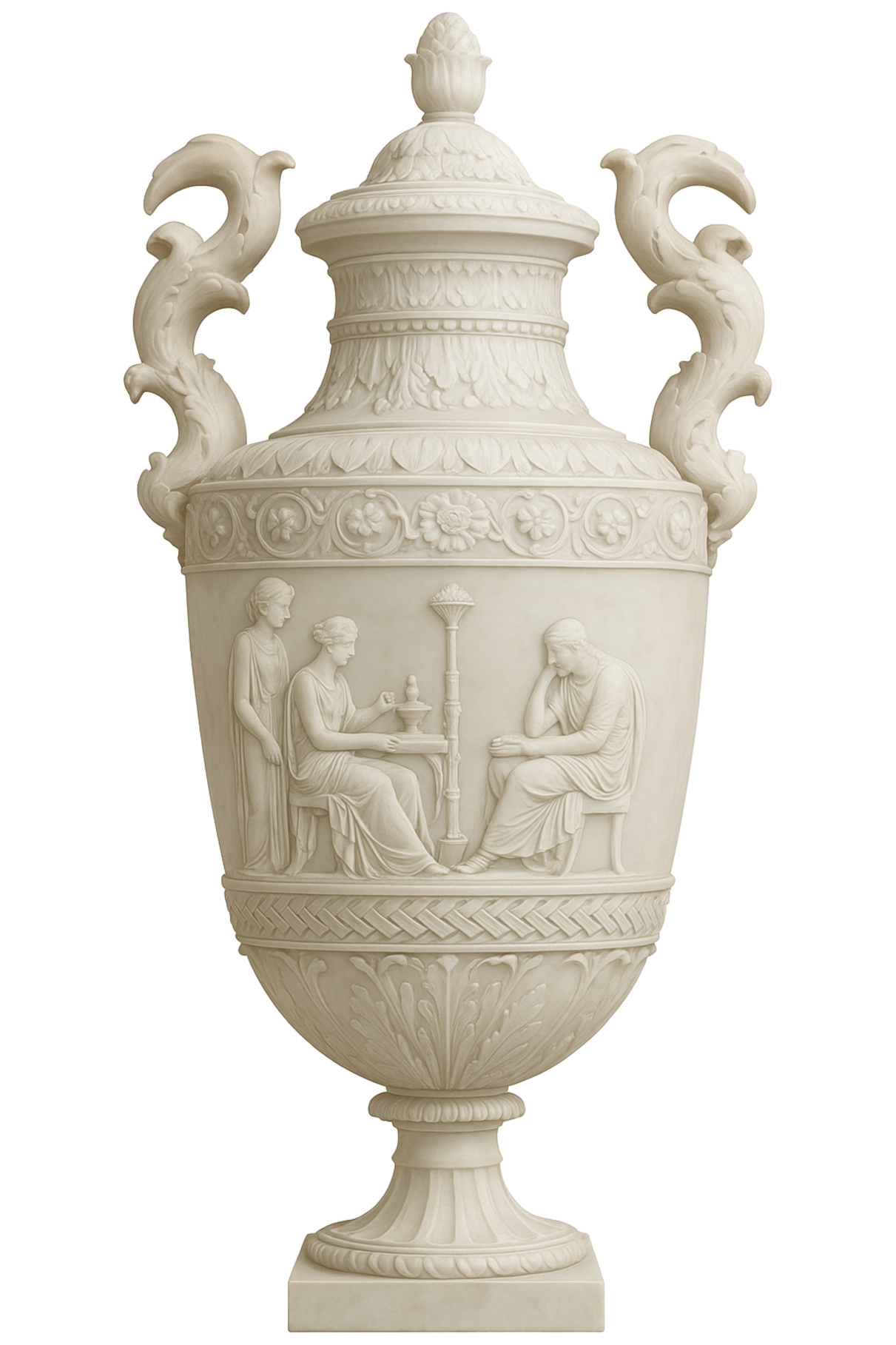
Alabaster Vase [H-256 MK, Hall – Balcony of Main Building]
This vase is made of alabaster, created in the early 19th century, manufacturer unknown. The museum owns two identical vases, donated to the collection in 1970. The second is on display on the floor below. This carved vase is richly decorated with floral and antique ornamentation. It has the form of an amphora on a narrow base, with two ears, covered by a lid topped with a pine cone motif. The ears are S-shaped, with mascarons at the bottom – heads emerging from leaves – and at the top, the ears end in a bird’s head on a long neck. The belly of the vase depicts the scene “Odysseus at Circe’s Table.” The relief is based on a sketch from the early 1790s by the English sculptor John Flaxman. The artist created a series of illustrations for Homer’s “The Odyssey.” In 1805, they were published in an etching. The vase presented one floor below, similar to this one, depicts another scene from “The Odyssey” – “Eurykleia Discovers Odysseus.” These types of vases, like sculptures in the classical style, were a decorative element in aristocratic residences. Most often made of white marble or alabaster, they lent the interior a light and romantic feel. The fashion for ancient art continued from the modern period to the early 20th century. The love of classical canons of beauty was reflected in all fields of art. Archaeological discoveries in the 18th century contributed to this popularity. In Poland, King Stanisław August Poniatowski popularized ancient art. As a great lover of art, he brought copies of the most popular ancient sculptures to Poland. He employed Italian sculptors, who commissioned numerous works.