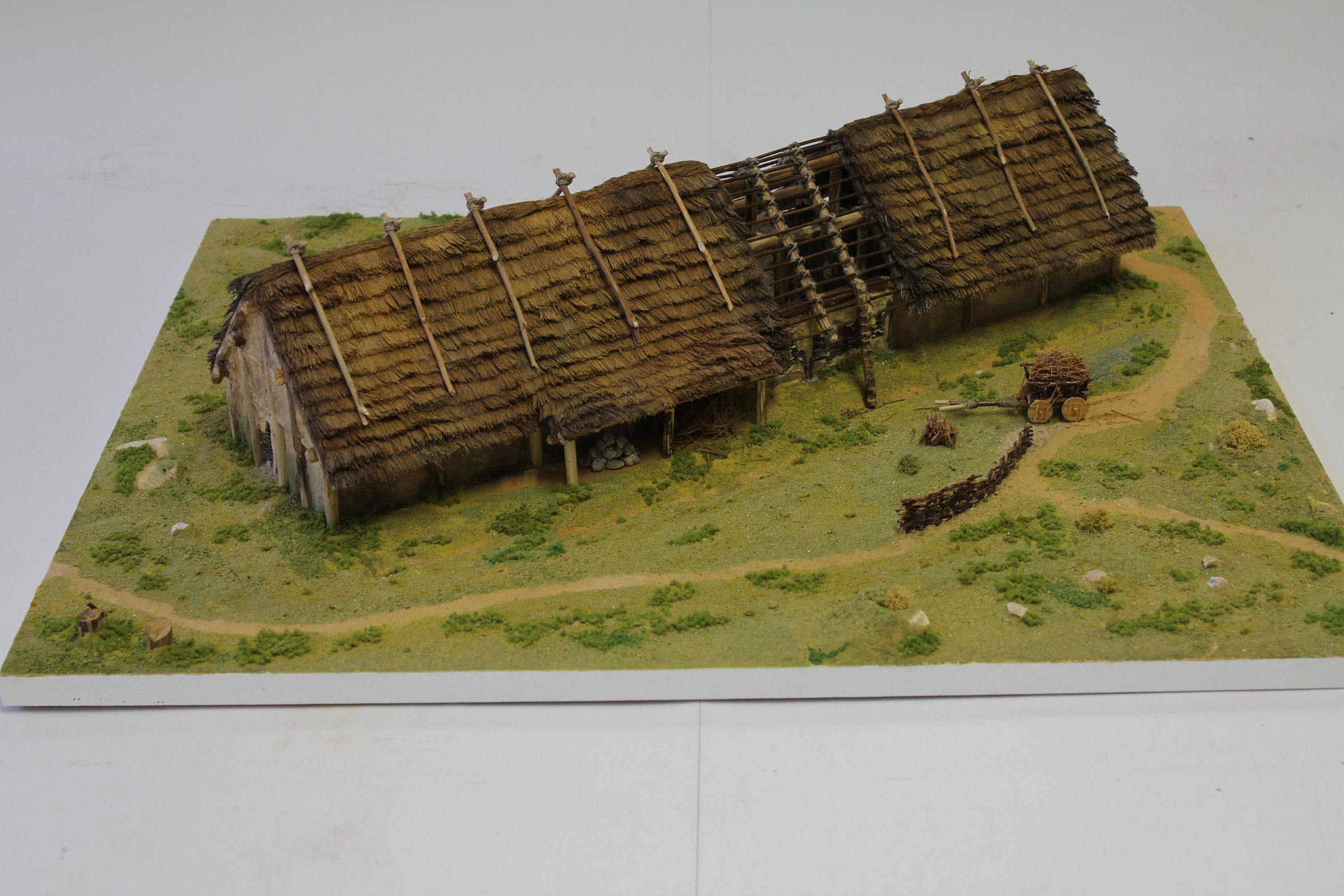
Remains of Neolithic hall-type houses were discovered in Kormanice, Fredropol commune. The exhibition featured a 1:50 scale reconstruction of one of these houses. The house, rectangular in plan, had post-and-beam construction, dimensions of 30 x 6-6.5 m and an estimated height of approximately 5 m. It dates from the mid-6th to early 5th millennium BCE. The walls of the long, rectangular huts were constructed using a row of posts set in the ground. The spaces between them were filled with wickerwork made of thin twigs and sealed with clay dug along the walls, as evidenced by elongated pits discovered at the sites. Inside the house, posts were driven along its entire length to support the roof structure. They were most often arranged in three rows. The high, steep, gabled roof was likely covered with straw, perhaps also reeds. Supported not only by the internal columnar structure but also by the columns that formed the walls, it effectively protected the household from changing weather conditions. Oak trunks were most often used for the hut frames, due to this tree’s greatest strength. Maple, elm, and pine were used to a lesser extent. The houses were divided into three sections, each serving a different function. The central section was used for residential purposes, due to the largest amount of space necessary for daily activities. The northern section likely housed a place for animals or a living/sleeping area. The southern section likely housed a granary for storing grain. Given that the original area of the huts used by the early Neolithic population has not survived, we can only surmise how individual sections of the house were developed and used. Each such hut was the basic economic and social unit. Within this area, all economic activity of the group living in the settlement was concentrated, including the production of tools and vessels. The dimensions of such houses ranged from a dozen to over 40 meters in length, and their width ranged from 4.5-7.5 meters. The houses were likely inhabited by several individual families, probably consisting of 16-20 people. The settlement consisted of several huts spaced 10-30 meters apart, with a population of 20-100 inhabitants. Early Neolithic settlements were typically open, lacking any defensive system (ramparts, palisades, or ditches). Fields were cultivated nearby.
Neolithic Hut from Kormanice